

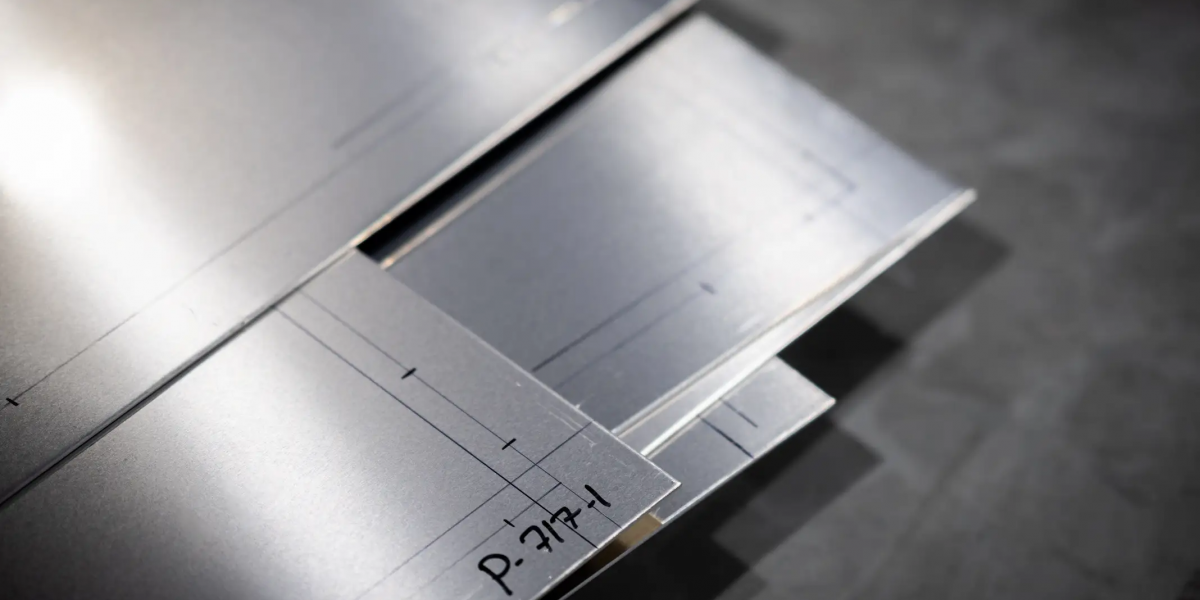
The choice of aluminum alloy is often at the center of specification discussions. But is it really the factor that determines the durability of your facade?
The short answer: no. The alloy is one of several elements that contribute to the durability of the cladding. For the vast majority of architectural projects, what matters most, beyond the alloy itself, is the quality of the finish and its application, as well as the rigour of the pretreatment. Here is what you need to know to specify with confidence.
Three Alloys at a Glance
Taken independently, aluminum alloys have different characteristics that make them better suited to certain applications. In the context of architectural panel applications, three alloys are commonly used.
The 3003-H14 (Al–Mn) offers excellent formability and is well suited for general exterior cladding.
The 5052-H32 (Al–Mg) has the highest yield strength of the three at 193 MPa and marine-grade corrosion resistance; it is the standard choice for demanding environments.
The 5754-H42 (Al–Mg) is very close to the 5052, with slightly superior resistance in industrial acid environments.
Important: these corrosion characteristics apply to bare, unfinished aluminum. In architectural applications, aluminum is always protected by its paint system.
What Actually Determines Durability
The corrosion performance of a facade panel depends above all on three elements: the quality of the surface pretreatment (cleaning, degreasing, chemical conversion coating), the certification of the paint system (AAMA 2604 or 2605), and the design of construction details (edge protection, drainage, isolation of fasteners).
In applications involving architectural panels that are painted after being cut to size, the difference in corrosion resistance between 5052-H32 and 5754-H42 is virtually negligible—far less significant than the impact of the pretreatment and paint system.
For painted architectural panels cut to their final dimensions, the difference in corrosion resistance between the 5052-H32 and the 5754-H42 is practically negligible, far less significant than the impact of the pretreatment and paint system.
Note: any cut made on site or in the shop after pretreatment and painting exposes bare aluminum at the edge, outside the scope of the AAMA 2605 certified process.
Strength and Elasticity
Facade panels are subject to continuous mechanical loads: wind, snow, rain and ice loads, as well as thermal cycling. It is in this context that yield strength becomes a relevant parameter; it represents the threshold beyond which the material begins to deform permanently.
The higher yield strength of the 5052-H32 (193 MPa vs. 130–150 MPa for the 5754-H42) provides additional margin for long unsupported spans. In practice, design is almost always governed by deflection criteria, although the higher yield strength of the 5052-H32 means it can withstand greater wind loads before permanent deformation occurs, such cases are relatively rare.
As for Brinell hardness (HB), the three alloys compare as follows: the 3003-H14 has a hardness of 40 HB, the 5052-H32 of 60 HB, and the 5754-H42 of 63 HB. The difference between the two 5000-series alloys is therefore 3 HB, approximately 5%, with no measurable impact in service. Surface damage resistance is governed by the coating system itself, not the substrate.
An Environmental Advantage Worth Considering
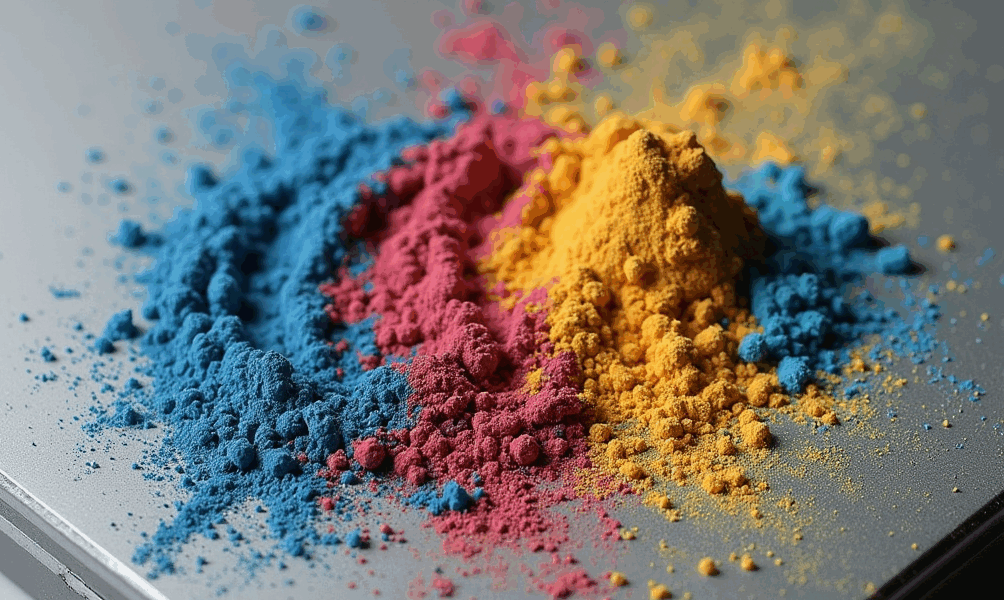
Thermosetting powder coating is solvent-free, with near-zero VOC emissions and a high recovery rate for unapplied powder. The environmental advantage does not stop there: pretreatment also plays a role. The zirconium-based pretreatment used at Maibec Architectural is significantly less polluting than the hexavalent chromium treatment still common in the industry. The complete process, pretreatment and finish, represents an objectively more favourable option for projects incorporating LEED criteria.
In Conclusion
Rather than asking “which alloy?”, the right question is: which finish, which application method, which pretreatment? At Maibec Architectural, our finishes comply with AAMA 2604 and 2605 standards and are applied at the end of the manufacturing process, fully covering all surfaces and edges with a continuous protective layer. The aluminum is never re-exposed, ensuring optimal protection from the moment it leaves the facility.
Our technical team is available to help you identify the right product for your project.
Stay tuned, our next article explores the types of architectural finishes, with more technical topics to come.
Sources:
- Alu Québec – CEIAL, Corrosion Resistance of Aluminum (aluquebec.com) (french version)
- Worthwill – 5052 vs. 5754 Marine Aluminum: Differences and How to Choose
- KDM Fabrication – A complete comparison guide
- Artizono-Aluminium-5052-vs-5754-a-comprehensive-comparison