

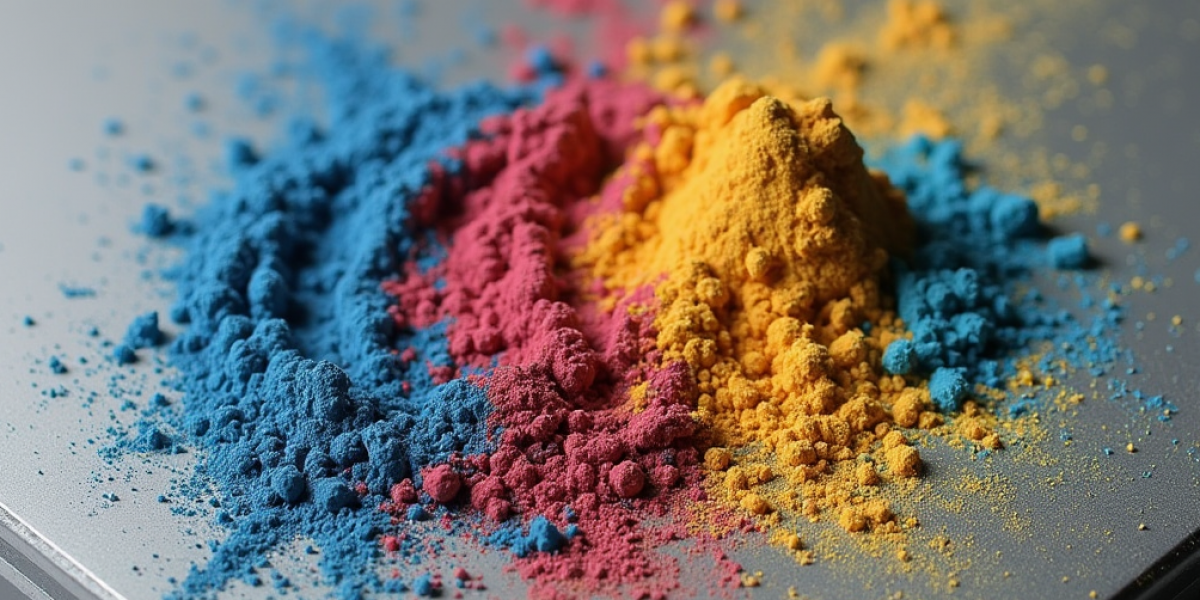
There’s a persistent assumption in the industry that liquid paint always outperforms electrostatic powder paint on architectural aluminum. It still shows up in public and private construction specs, and it’s worth a closer look. Modern performance standards and the intended use of the product, whether it’s an exterior façade, a storefront, or an interior component, tell a different story. In the end, the right finish comes down to what the product is for.
The AAMA standard: the real performance benchmark
The AAMA family of standards sets three performance tiers for architectural aluminum finishes, from entry-level to top-tier.
AAMA 2603: the baseline. A good fit for interiors, lightly exposed façades, and decorative elements. Expect limited UV resistance, moderate color retention, solid adhesion and uniformity, and a budget-friendly cost. Florida is the AAMA’s reference climate for UV and humidity testing.
AAMA 2604: high performance. Strong UV and weather resistance, solid color and gloss retention, a broad palette of colors and finishes, and a compelling performance-to-cost ratio. To meet the standard, the coating must hold color within a Delta E of 5 and retain at least 30% of its gloss under Florida exposure. This tier is the right call when mechanical durability matters more than top-tier long-term UV performance.
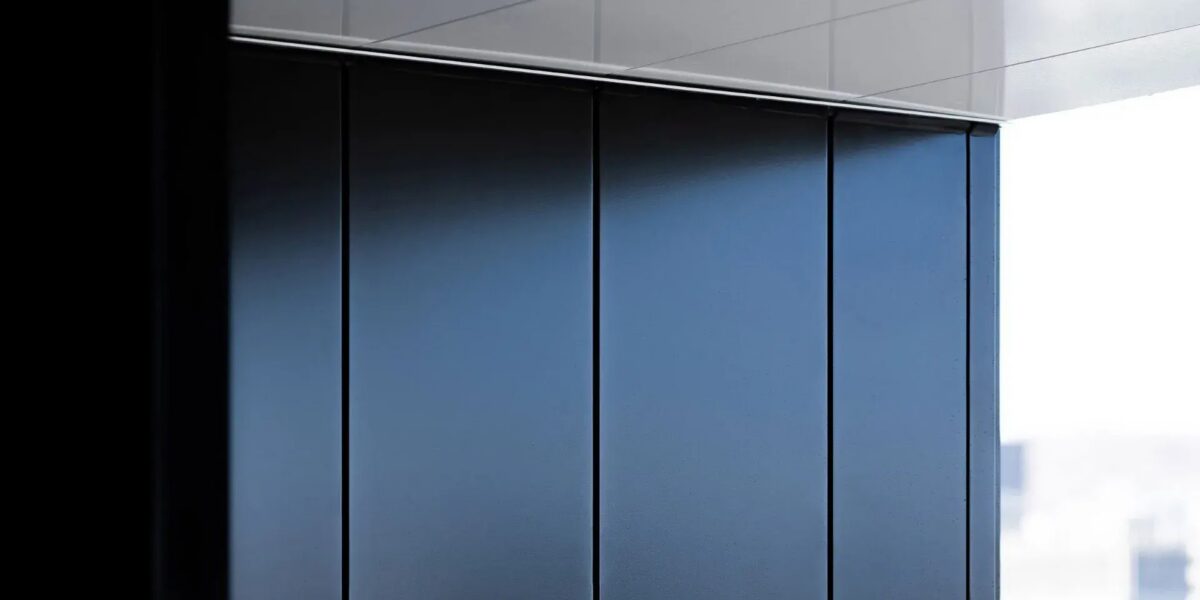
AAMA 2605: the top tier. Outstanding UV resistance, exceptional color and gloss retention, very high chemical and weather resistance, and minimal maintenance. The standard calls for color retention within a Delta E of 5 and at least 50% gloss retention under Florida exposure. This is the benchmark for landmark projects where the finish must look the part for the long haul.
AAMA standards lay out objective, measurable, and reproducible performance criteria, and manufacturer warranties typically follow suit.
What many people overlook: both liquid and powder coatings can meet AAMA 2605, as long as the resin is a fluoropolymer. The application technology isn’t what matters; the specified performance is.
What the liquid paint system doesn’t always tell you
Liquid finishes are often pitched as a three-coat system (primer, paint, clear coat), and that layered build-up is presented as proof of technical superiority. It isn’t. The extra coats aren’t an inherent strength of the technology; they’re a workaround for its physical limits. You simply can’t lay down a 2.5 mil dry film in a single liquid pass.
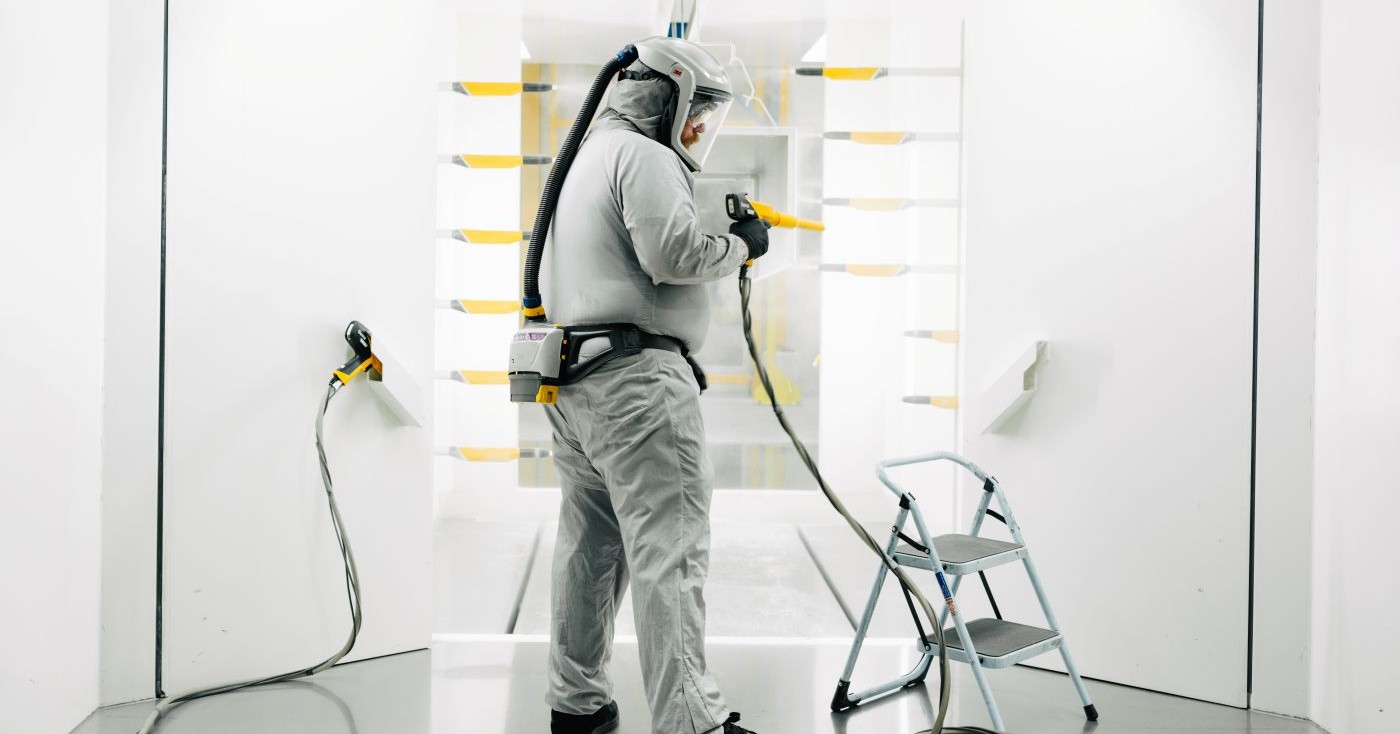
AAMA 2605-certified electrostatic powder paint, by contrast, hits 3 mils in a single coat. The thicker film delivers better mechanical strength and greater abrasion resistance, both of which matter on façades that take their share of weather, impacts, and repeated cleaning.
Powder paint also has a strong environmental edge. It’s 100% dry solids, with no solvents, no VOCs, no BPA, and no formaldehyde. Liquid systems, on the other hand, run 30% to 50% solvent, which directly affects the building’s environmental footprint and the way emissions and waste are handled at the application shop.
Pretreatment: the most poorly understood argument
Some specifiers rule out powder paint because it doesn’t use hexavalent chromium pretreatment, the chemistry traditionally paired with liquid paint systems.
That logic deserves a second look. Whether the coating is liquid or powder, what really drives long-term durability is surface preparation, specifically, the right pretreatment matched to the alloy and the finish. Without it, even the best paint eventually fails.
Hexavalent chromium is legacy technology, and even AluQuébec’s Aluminum Centre of Expertise recognizes that its use is on the way out. Europe banned it between 2017 and 2019 (depending on the specific compound), with only tightly controlled, case-by-case exemptions, on the grounds of well-documented health and environmental risks.
The zirconium pretreatment used on modern powder paint lines, including Maibec’s in Drummondville, tells the opposite story. It’s non-toxic, heavy-metal-free, and produces far less industrial waste. It uses less water and less energy, and it fits squarely within today’s environmental expectations, a real asset for projects with sustainability targets.
It’s worth remembering why chromium pretreatment caught on in the first place: it was useful on lower-grade aluminum. For 5000- and 6000-series alloys, the kind often used in high-end architectural cladding, a properly applied zirconium pretreatment delivers all the adhesion and corrosion resistance needed to meet both AAMA 2604 and AAMA 2605. Same pretreatment, both tiers.
Quality control: the advantage of integrated production
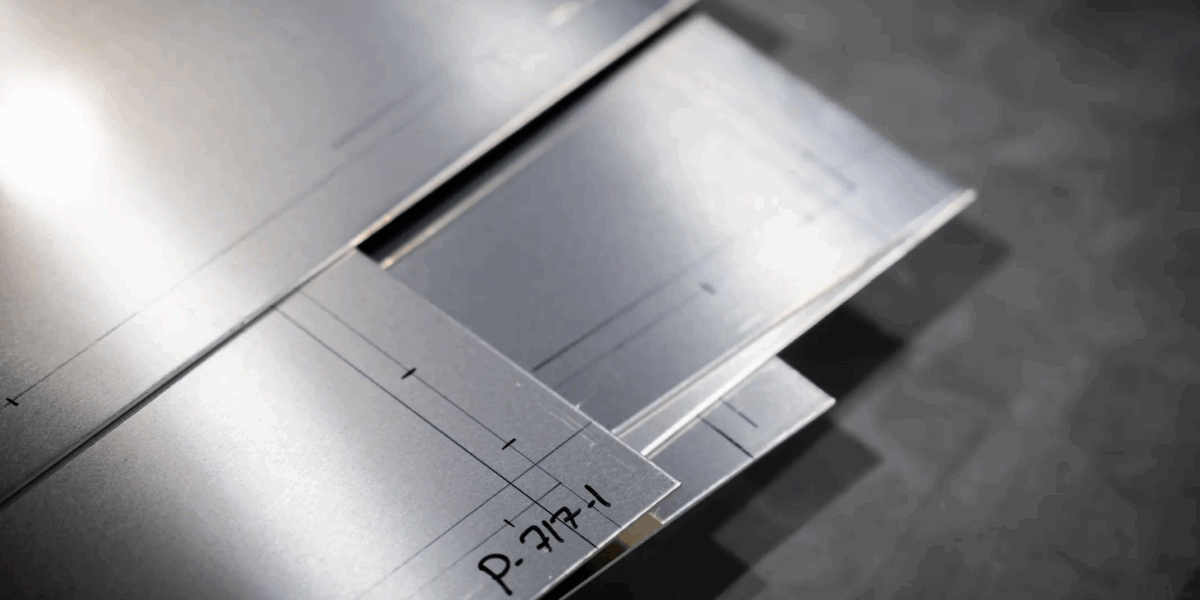
One factor that rarely makes it into specifications is the chain of responsibility between fabricating the aluminum substrate and applying the finish. When both steps happen under one roof, quality control is tighter, accountability stays in one place, and the substrate is far less exposed to damage in between (handling, transport, intermediate storage all fall away).
At Maibec, fabrication and painting both happen at our Drummondville plant. Every batch goes through pH, conductivity, and chemical concentration checks at each pretreatment stage, plus film thickness measurements before and after curing. Finished products are then put through a battery of tests, including the cross-hatch tape test, the boiling test, and the MEK rub test, to round out the quality protocol. That being said, when a project calls for something outside our standard offering, we work with qualified paint subcontractors held to the same AAMA performance and quality control standards.
What this means in practice for your specifications
Specifying a finish by brand or application technology, rather than by performance standard, can unintentionally narrow the field, lock in less environmentally sound options, and complicate things later when equivalency requests come up.
A stronger, more innovation-friendly specification leans on the AAMA performance standard and lets the qualified manufacturer prove conformity, whether the system is powder or liquid.
AAMA-certified electrostatic powder paint, applied by a manufacturer that owns the full process, isn’t just an alternative to a liquid finish. For high-quality architectural aluminum, it stands on its own as a technical, environmental, and economic solution, fully equivalent to liquid paint, and in many cases the stronger choice.
Maibec Architectural manufactures and paints its aluminum cladding products in Drummondville, Quebec. Its powder paint line is certified to AAMA 2604 and AAMA 2605.
Have a technical question about specifying our finishes? Get in touch with our team.